
How to Declutter Your Home Without Throwing Away Useful Things
The extra chair, the untouched books, the appliance you keep for 'someday'. Give your clutter an exit plan with a practical guide to deciding what to keep, swap, sell or give away.
Swapadda · 10 October 2026 · 7 min read
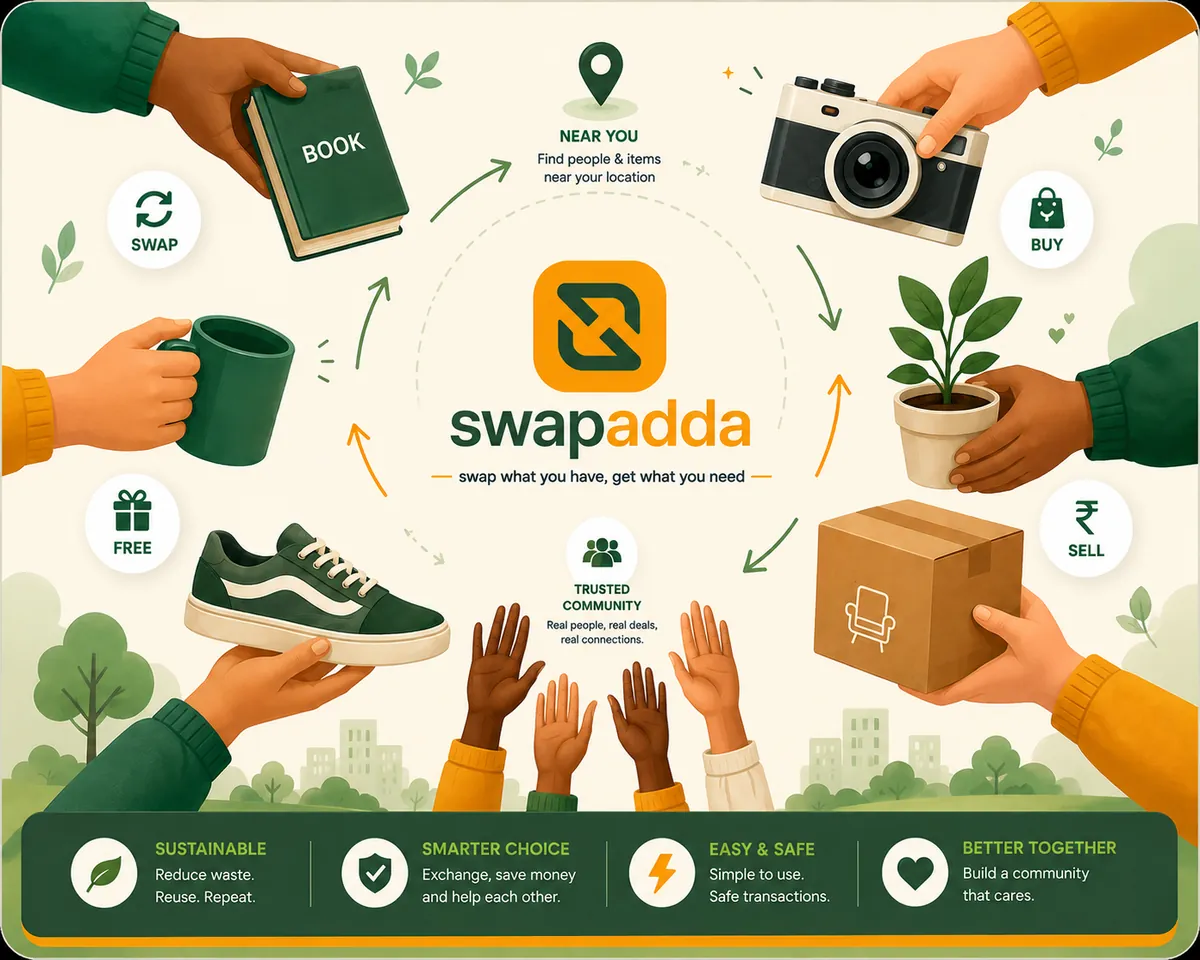
You open a cupboard looking for one thing and find five things you had forgotten you owned. A stack of books. An extra dinner set. The appliance bought with good intentions and used twice.
None of it is necessarily rubbish. It just no longer belongs in your everyday life.
If you are wondering how to declutter your home without throwing away useful things, start with one small area. Separate what you use from what you do not, then choose a real next step for each item: keep, swap, sell or give away. Anything unsafe or beyond use needs a different route, such as appropriate repair or recycling.
The aim is not an empty home. It is a home that makes room for the life you actually live.
Why the 'just in case' cupboard never gets smaller
Some possessions earn their space every day. Others stay because letting them go feels like admitting the purchase was a mistake.
You might think, 'It was expensive,' or 'Someone might need it.' Those are understandable feelings. But keeping an unused item does not recover its purchase price, and someone else cannot use it while it stays hidden in your cupboard.
Ask a more helpful question: If I did not own this already, would I choose to bring it home today?
A no does not automatically mean it must go. Sentimental things, seasonal items and things you genuinely rely on deserve their own consideration. The question simply helps separate a real reason to keep something from a vague 'someday'.
Start with one shelf, not your whole house
Choose a drawer, one kitchen shelf or a corner of your room. Set aside a manageable amount of time and avoid pulling out more than you can sort and put back.
For each item, ask:
- Do I use it, need it or meaningfully value it?
- Is it clean, complete and safe to use?
- If I let it go, would I want something in return?
- Can I realistically photograph it and arrange a handover?
That last question matters. A pile labelled 'to sell' is still clutter until you take the next step.
Swap, sell or give away: which option fits?
| Your situation | A useful next step | What to be clear about |
|---|---|---|
| You use the item or have a specific reason to keep it | Keep it | Give it a proper place in your home |
| You have a usable item and need something else | Consider a swap | State what you are offering and what you would welcome |
| You would prefer money rather than another item | Consider selling | Set a realistic asking price and disclose condition |
| You want a usable item to reach someone without expecting anything back | Give it away | Explain what is included and how collection can work |
| The item is unsafe, damaged beyond use or unsuitable to pass on | Look into appropriate repair, recycling or disposal | Do not describe it as ready to use |
Swap when you need something, not just because you can
Swapping can make it easier to part with a useful possession: you are choosing something that serves you now instead.
Perhaps you have a small desk you no longer use and need a bookshelf. Or you have finished a set of novels and would enjoy different books. These are possibilities, not promises of available matches.
Before looking at offers, write down what you actually need. Otherwise, it is easy to exchange one unused item for another. Browse Swapadda with that list in mind. If you are new to exchanging items, read our first-swap guide.
Sell when recovering some value matters to you
Selling may be the better choice if you need cash or do not want another possession.
Look at the item's present condition, not just what you originally paid. Comparable listings can give context, but an asking price is not proof of what a buyer will pay. Be willing to decide whether waiting for a particular price is worth the space the item occupies.
Give when you want to help without a return
Giving can suit usable things you are ready to let go of without negotiating a swap or price. On Swapadda, giveaways are called Blessings.
Explore Blessings or look at Community Needs to see whether something you have could help someone. Check each request rather than assuming a match. Giving directly through the marketplace is not the same as donating to a registered charity.
A gift should still be clean, accurately described and suitable to use. Generosity does not mean passing on a problem.
Give your decluttering pile an exit plan
For every item you decide to pass on, choose a small action you can complete:
- Prepare it. Clean it, check that it works and gather any parts that belong with it.
- Photograph it. Show the actual item, including scratches, wear or missing pieces.
- Describe it. Include size, condition and anything a recipient needs to know.
- Choose your route. Swap, sell or give, depending on your goal.
- Plan the handover. Think about transport, collection and a practical meeting place before agreeing.
Here is an example description, not a live listing:
Small wooden side table, 45 cm tall, with a visible scratch on the top. Stable and ready to use. Open to swapping for a reading lamp, or giving it to someone who needs a table. Collection arrangements to be agreed.
A specific description saves both people from guessing. Create a listing when you are ready.
Keep handovers thoughtful and safe
Discuss details in chat before meeting. Agree on the exact item, condition and any payment or exchange. For bulky furniture, confirm measurements and who will handle collection.
Choose a public meeting place where practical. If home collection is necessary, consider having someone else present. Inspect items before completing an exchange and never share passwords, OTPs or unnecessary identity documents.
For phones, laptops and other connected devices, remove accounts and personal data before passing them on. Do not offer damaged batteries or unsafe electrical items as working goods; check appropriate local recycling options instead.
Common questions about decluttering
What should I do with unwanted household items that still work?
Decide whether you want another item, cash or simply to help someone. That points you towards swapping, selling or giving. Choose the route you can realistically follow through on, and describe condition honestly.
How do I stop replacing clutter with more clutter?
Make a short needs list before browsing. If an offered item does not solve a real need, you do not have to accept it. A successful declutter does not require you to take something home in return.
What if nobody wants my item?
Review the photos, description, asking price or requested swap. Check whether collection arrangements are too restrictive. You can reconsider your preferred route, but there is no guarantee of a match. If giving through an organisation, confirm what it currently accepts before taking anything there.
One useful item is a good beginning
You do not need a dramatic before-and-after photograph. Start with one thing you no longer use and decide where it should go next.
Maybe it becomes a swap that meets a real need. Maybe you sell it. Maybe it becomes a Blessing for someone else.
Less clutter for you. A useful second chapter for the item.
Choose your next swap, explore community requests or list one item today.